Views: 80
The Ultimate Guide to Solar-Powered Security Cameras: Sustainable, Wire-Free Protection for Every Property, Today, solar power is no longer a niche alternative; it is the “gold standard” for both modern residential and commercial security. The shift from hardwired systems to sustainable, autonomous surveillance represents a fundamental change in how we think about safety.
I. Introduction: The Evolution of Perimeter Security
For decades, perimeter security was synonymous with miles of cabling, professional drilling, and a constant drain on the electrical grid. If you wanted to monitor a remote gate or a dark corner of a large backyard, the logistical hurdles—and the subsequent costs of hiring electricians—often outweighed the benefits of the surveillance itself. However, we have entered a new era of property protection. The convergence of high-efficiency photovoltaic technology, advanced battery storage, and low-power chipsets has given rise to the solar-powered security camera.
Today, solar power is no longer a niche alternative; it is the “gold standard” for both modern residential and commercial security. The shift from hardwired systems to sustainable, autonomous surveillance represents a fundamental change in how we think about safety. By leveraging the sun, property owners can now achieve “set-it-and-forget-it” security that operates independently of the municipal power grid.
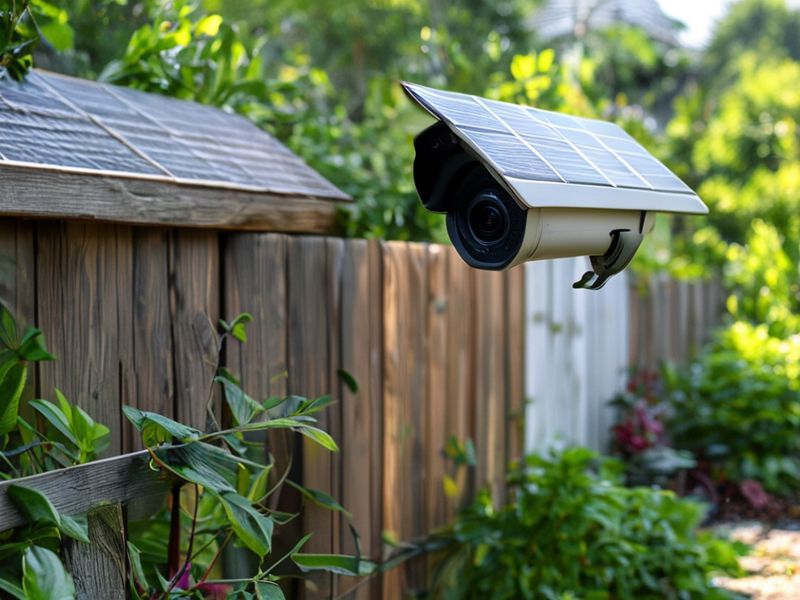
The value proposition is clear: solar-powered systems offer massive cost savings by eliminating monthly electricity increases and expensive installation fees. Environmentally, they reduce the carbon footprint of your home’s 24/7 monitoring. Practically, they offer a level of flexibility that was previously impossible, allowing for total wire-free protection in the most challenging environments. Whether you are a homeowner looking to close security gaps or a business owner protecting a remote asset, solar security is the most versatile tool in your arsenal.
II. How Solar-Powered Security Cameras Work: The Technology Behind the Lens
To appreciate the reliability of modern solar cameras, one must understand the sophisticated ecosystem of hardware that resides within these compact devices. It is not merely a camera with a panel attached; it is a mini-power plant designed for maximum efficiency.
The Ultimate Guide to Solar-Powered Security Cameras: Sustainable, Wire-Free Protection for Every Property
The Photovoltaic Process: Converting Sunlight into DC Electricity
At the heart of every system is the solar panel, typically composed of monocrystalline or polycrystalline silicon cells. When photons from sunlight hit these cells, they knock electrons loose from atoms, generating a flow of Direct Current (DC) electricity. Modern panels have seen a significant jump in efficiency, with many consumer-grade panels now achieving 20-22% energy conversion rates. This means that even in areas with less-than-ideal sunlight, the panels can generate enough “trickle charge” to keep the system operational.
Energy Storage Solutions: How High-Capacity Batteries Ensure 24/7 Operation
Since the sun doesn’t shine at night, the “brain” of the solar camera is its internal battery bank. Most high-end solar cameras utilize Lithium-ion (Li-ion) or Lithium Iron Phosphate (LiFePO4) batteries. These batteries are chosen for their high energy density and their ability to withstand thousands of charge-discharge cycles. A well-specced solar camera usually houses a battery large enough to power the device for 3 to 6 months on a single full charge, assuming the solar panel is disconnected. This massive buffer ensures that even during a week-long storm, your security remains uncompromised.
Low-Power Consumption Modes: The Role of PIR Sensors
A common misconception is that solar cameras record 24/7 like a wired NVR system. To conserve energy, most solar cameras utilize PIR (Passive Infrared) sensors. Unlike traditional motion detection, which analyzes every frame of video (a power-hungry process), PIR sensors detect heat signatures. When a human or vehicle moves across the field of view, the heat change “wakes up” the camera from its ultra-low-power standby mode to record and send an alert. This allows the camera to consume milliwatts of power during the day and only spike in usage when an actual event occurs.
III. Key Benefits of Switching to Solar Security
The transition to solar-powered surveillance is driven by more than just a desire to be eco-friendly. It is a pragmatic choice based on several key operational advantages.
Total Wireless Freedom
The most immediate benefit is the elimination of wires. Traditional cameras require a power cable and often a data cable (Ethernet). This limits placement to areas near electrical outlets or requires expensive trenching through landscapes. Solar cameras are truly “off-grid.” You can mount a camera on a tree at the edge of your property, on a detached barn, or on a remote construction crane without a single inch of copper wiring.
Reliability During Power Outages
Standard security systems are vulnerable. If a burglar cuts the power lines to a house or if a storm knocks out the local grid, traditional cameras go dark. Solar-powered cameras are immune to these disruptions. Because they carry their own power source and storage, they continue to monitor, record, and (if using cellular data) alert you even when the rest of the neighborhood is in a blackout.
“Solar security cameras provide a layer of redundancy that traditional wired systems simply cannot match, making them essential for high-stakes perimeter monitoring.”
Scalability and Versatility
As your security needs grow, a solar system grows with you. If you realize your driveway has a blind spot, you can simply screw a solar camera into place in five minutes. There is no need to reconfigure your home’s wiring or add new breakers to your electrical panel. This portability also makes them ideal for renters or temporary sites like festivals and construction zones.
Long-term ROI
While the upfront cost of a solar camera might be slightly higher than a basic wired unit, the Return on Investment (ROI) is realized quickly. You save $150-$300 per camera on professional installation costs. Furthermore, you eliminate the incremental increase in your utility bill. Over a five-year lifespan, a solar camera essentially pays for itself through avoided labor and energy costs.
IV. Critical Features to Evaluate Before Purchasing
Not all solar cameras are created equal. To ensure you aren’t left with a “dead” device during the winter months, you must evaluate these specific technical specifications.
Solar Panel Efficiency and Placement
Look for cameras that offer adjustable solar panels. Panels that are integrated into the top of the camera body are convenient but often fail because the camera’s lens needs to point one way while the sun is in another. A separate panel with a 10-15ft cable allows you to mount the camera in the shade while placing the panel in direct, unobstructed sunlight.
Video Quality and Night Vision
In 2024, 1080p is the bare minimum. For usable evidence, 2K or 4K resolution is preferred. Furthermore, evaluate the night vision technology.
- Infrared (IR): Provides discrete black-and-white footage in total darkness.
- Color Night Vision: Uses high-aperture lenses and spotlights to provide full-color images at night, which is crucial for identifying the color of a getaway vehicle or a suspect’s clothing.
Connectivity Options: Wi-Fi vs. 4G LTE
Most residential solar cameras use 2.4GHz Wi-Fi. However, if you are monitoring a remote ranch, a boat dock, or a construction site, you will need a 4G LTE cellular camera. These require a SIM card and a data plan but allow the camera to transmit video from anywhere with a cell signal, completely independent of a local router.
Storage Protocols: Local vs. Cloud
Check if the camera supports local microSD card storage (up to 256GB or 512GB). Local storage is a one-time cost and works even if the internet is down. Cloud storage is excellent for redundancy (if a thief steals the camera, you still have the footage), but it usually involves a monthly subscription fee.
Weatherproofing and Durability
An outdoor camera must survive the elements. Look for an IP65 or IP66 rating.
- IP65: Protected against water jets from any angle.
- IP66: Protected against powerful water jets and heavy seas.
Additionally, check the operating temperature range if you live in a climate that sees extreme freezes or desert heat.
V. Top-Tier Recommendations for 2024
The market is flooded with options, but these categories represent the best-in-class performers for specific use cases.
The Best Overall Performer
For the average homeowner, a 2K resolution camera with an integrated yet tiltable solar panel and dual-band Wi-Fi is the sweet spot. Look for models that offer AI-driven human detection to reduce false alerts from swaying trees or passing animals. Brands like Eufy and Arlo currently lead this space with high-capacity batteries that can last months on a single charge.
Best for Remote Areas (No Wi-Fi)
If you need to monitor a property miles away from the nearest router, a 4G LTE Solar Camera is the only choice. These units are built ruggedly and often come with a larger, high-wattage external solar panel to handle the higher power draw of cellular modems. Reolink’s Go series is a perennial favorite in this category for its reliability in off-grid scenarios.
Best Budget-Friendly Option
You don’t need to spend $300 to get quality. Several brands offer 1080p solar-integrated cameras for under $100. While they may lack advanced AI tracking or 4K resolution, they provide excellent “visual deterrence” and reliable motion alerts for entry-level security needs.
Best for Smart Home Integration
For those deep in the Amazon or Google ecosystems, compatibility is key. Ensure the camera supports Alexa or Google Assistant so you can say, “Show me the backyard” on your smart display. Some newer models are also starting to support Apple HomeKit via the Matter protocol, though this is still emerging in the solar sector.
VI. Practical Examples and Case Studies
How do these cameras perform in the real world? Let’s look at three distinct scenarios.
Example 1: The Remote Property Owner
A landowner in rural Montana needed to monitor a remote gate to prevent illegal dumping. With no power for 10 miles and no Wi-Fi, they installed a 4G LTE solar camera. By mounting the solar panel on a 15-foot pole above the brush, the camera maintained a 100% charge throughout the summer and successfully captured a license plate of a vehicle entering the property at 2:00 AM.
Example 2: The Suburban Homeowner
A family in a new housing development wanted to monitor their large backyard which backed onto a public park. They didn’t want to dig up their new patio to run wires. They installed three Wi-Fi solar cameras on the fence line. The DIY installation took 20 minutes, and the cameras now provide a complete 360-degree view of their property boundaries with zero impact on their electricity bill.
Example 3: The Small Business
A local car dealership was experiencing “blind spots” in their back lot where expensive inventory was stored. Instead of paying thousands for a commercial electrical contractor to run conduit, they installed a series of high-definition solar arrays. These cameras utilize “Starlight” sensors to provide crystal-clear nighttime footage, significantly reducing their insurance premiums due to enhanced surveillance.
VII. Installation and Maintenance Best Practices
To get the most out of your investment, follow these professional installation guidelines.
Optimizing Sunlight Exposure
The efficiency of your camera depends entirely on the “Peak Sun Hours” it receives. In the Northern Hemisphere, your solar panel should ideally face South. Even a small amount of shade—like a single branch or a chimney shadow—can reduce a panel’s output by 50% or more. This is known as a “shadow trap.” Use a sun-tracking app on your phone to see where the sun will be during the winter solstice to ensure year-round charging.
Security Against Theft
A common concern is: “What if someone steals the camera?” To prevent this:
- Mount the camera at least 9-10 feet high, requiring a ladder to reach.
- Use anti-theft mounting brackets that require a proprietary key to unscrew.
- Ensure the camera is visible; the primary goal of security is deterrence. A thief is less likely to approach if they see they are already being recorded and the footage is being uploaded to the cloud.
Routine Maintenance
Solar cameras are low-maintenance, but not “no-maintenance.”
- Clean the Panels: Dust, pollen, and bird droppings can significantly block sunlight. Wipe the panels with a damp cloth every 3-6 months.
- Firmware Updates: Manufacturers frequently release updates to improve battery efficiency and AI detection. Enable “Auto-Update” in your camera’s app.
- Check Connections: Ensure the cable between the panel and the camera is seated tightly and the weatherproofing seals are intact.
VIII. Frequently Asked Questions (FAQ)
Q: Do solar security cameras work on cloudy or rainy days?
A: Yes. Solar panels do not require direct, scorching sunlight to work; they can produce energy from indirect light. While the charging speed will be slower, the large internal battery buffer is designed to carry the camera through several days of overcast weather without an issue.
Q: How long do the batteries typically last before needing replacement?
A: Most modern Lithium-ion batteries used in security cameras are rated for 3 to 5 years of constant use. Many high-end units allow for the battery to be replaced, extending the life of the camera housing and lens indefinitely.
Q: Can I use a solar camera indoors near a window?
A: It is not recommended. Most modern windows have UV-filtering coatings that block the specific spectrum of light needed for solar panels to charge efficiently. Furthermore, the PIR sensor will not work through glass, as it cannot detect heat changes outside the window.
Q: What happens if the solar panel is damaged by hail?
A: Most solar panels for security cameras are made with tempered glass or high-impact polymers designed to withstand standard hail. However, if a panel is shattered, most manufacturers sell replacement panels separately, so you don’t have to replace the entire camera system.
IX. Conclusion: The Future of Sustainable Surveillance
The evolution of solar-powered security cameras marks a turning point in property management. We have moved past the era of technical limitations where security was tethered to the grid. Today, the combination of high-resolution optics, AI-driven detection, and autonomous solar power provides a level of reliability and flexibility that was once reserved for high-budget government installations.
When choosing your system, remember that the “best” camera is the one that matches your specific environmental needs. Whether it is a 4G LTE model for a remote construction site or a sleek Wi-Fi unit for a suburban backyard, the transition to solar is a move toward a more resilient, cost-effective, and sustainable future.
Are you ready to secure your property with the power of the sun? Start by auditing your property’s “blind spots” and identifying the south-facing mounting points that will provide your new surveillance system with the energy it needs to protect what matters most.
Merhaba! Harika bir yazı olmuş, elinize sağlık! Tam da bu aralar güvenlik kamerası arayışında olan biri olarak bu konuya denk gelmem çok isabetli oldu. Özellikle
Merhaba! Gerçekten çok yerinde ve bilgilendirici bir yazı olmuş, elinize sağlık. Güvenlik kameraları hep bir dert ol